Backfill Concrete Solutions for Yurt Camp Foundations
Learn how backfill concrete provides stable, durable foundations for yurt camping platforms, glamping pads, and off-grid structures in remote or uneven terrain.
Table of Contents
- What Is Backfill Concrete and Why It Matters for Yurt Camping
- Mix Design and Material Considerations for Yurt Foundations
- Application Techniques for Backfill Concrete in Glamping Sites
- Sustainability and Cost Benefits of Using Backfill Concrete
- Frequently Asked Questions
- Comparison of Foundation Approaches
- Practical Tips for Yurt Camp Owners
- Final Thoughts on Backfill Concrete
Key Takeaway: Backfill concrete is a cementitious material used to fill excavated voids, stabilize ground, and create level load-bearing pads for structures like yurt platforms. It offers superior strength, drainage control, and longevity compared to gravel or timber foundations, making it ideal for glamping sites in variable soil conditions.
Backfill Concrete in Context
- The global recycled concrete aggregates market was valued at 5.75 billion U.S. dollars in 2026 (Fortune Business Insights, 2025)[1].
- This market is projected to reach 12.35 billion U.S. dollars by 2034, growing at a CAGR of 10.02 percent (Fortune Business Insights, 2025)[1].
- The U.S. cement and concrete industry contributes 159 billion U.S. dollars annually to the national economy and supports 577,000 jobs (Portland Cement Association, 2025)[2].
What Is Backfill Concrete and Why It Matters for Yurt Camping
Backfill concrete is a specialized mix of cement, aggregates, and water designed to fill excavated areas, trenches, or voids around structural foundations. For yurt camping and glamping operations, this material provides a stable, level base that prevents shifting, erosion, and moisture damage. Unlike loose gravel or untreated soil, backfill concrete cures into a solid mass that distributes the weight of a yurt platform evenly, reducing the risk of settlement over time.
Yurt camp owners often face challenging terrain – sloped hillsides, soft forest floors, or rocky outcrops. Backfill concrete addresses these conditions by creating a uniform bearing surface. It also improves drainage around the foundation, which is critical for preventing water pooling beneath yurt floors. The material can be mixed on-site using portable equipment, making it practical for remote campsites where delivery of pre-mixed concrete is difficult.
Furthermore, backfill concrete can incorporate recycled aggregates, such as crushed concrete from demolition waste. Professor Ming Su of the University of Science and Technology Beijing notes that using construction and demolition waste as recycled aggregate backfill can significantly reduce the consumption of natural aggregates and help address the environmental challenges of underground mining[3]. This approach aligns with sustainable glamping practices that minimize ecological footprint.
Mix Design and Material Considerations for Yurt Foundations
Choosing the Right Aggregates
The aggregate component of backfill concrete plays a major role in its final strength and workability. For yurt foundations, a mix with well-graded crushed stone or recycled concrete aggregates provides excellent compaction and load transfer. The recycled concrete aggregates market is growing rapidly, with projections indicating it will reach 12.35 billion U.S. dollars by 2034 (Fortune Business Insights, 2025)[1]. This growth reflects increasing acceptance of recycled materials in construction applications, including backfill.
Cement Replacements and Environmental Impact
Traditional Portland cement is a major source of greenhouse gas emissions. However, innovations in binder technology allow for significant cement replacement without sacrificing performance. Narain Persaud, New Products and Applications Engineer at Graymont, reports that in mine backfill case studies, cement replacements of 35 to 50 percent are achievable, with externally validated lab work and field trials showing that backfill performance can be maintained while substantially lowering greenhouse gas emissions[4]. For yurt camp owners, using a binder with reduced cement content lowers the carbon footprint of their foundation while maintaining durability.
Persaud further states that based on the proportions of the GRAYBOND binder typically used for mine backfill, reductions of 30 to 50 percent in greenhouse gas emissions are observed, driven largely by the lower cement content in the backfill mix[4]. These advances make backfill concrete a greener choice for glamping infrastructure.
Application Techniques for Backfill Concrete in Glamping Sites
Site Preparation and Formwork
Proper site preparation is essential for a successful backfill concrete pour. Start by excavating the area to the required depth, typically 12 to 18 inches for a yurt platform, depending on soil bearing capacity and frost depth. Install formwork using treated lumber or steel edges to contain the concrete and define the pad shape. Ensure the base is compacted and free of organic material that could decompose and cause voids.
Mixing and Pouring
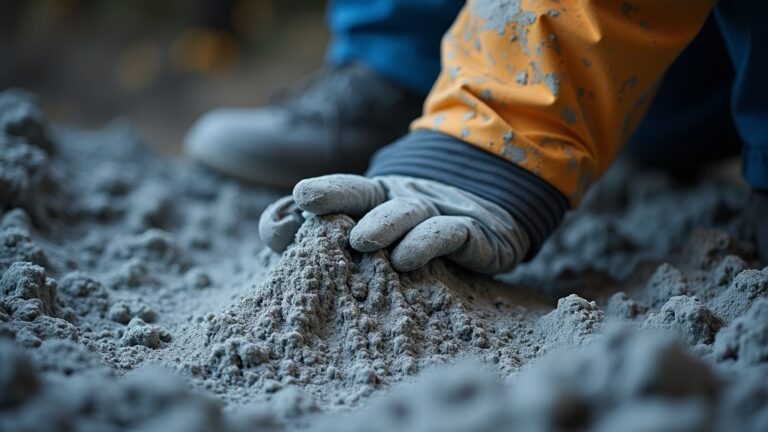
For remote yurt camps, a portable concrete mixer or volumetric mixer truck is ideal. The mix should have a slump of 4 to 6 inches for easy placement while maintaining stability on slopes. Pour the backfill concrete in continuous lifts, using a shovel or rake to spread it evenly. Consolidate the concrete with a vibrating probe or by rodding to eliminate air pockets. After pouring, screed the surface to the desired level and finish with a steel trowel for a smooth, durable pad.
Allow the concrete to cure for at least 7 days before placing the yurt structure. During curing, keep the surface moist with wet burlap or a curing compound to prevent cracking. For additional guidance on selecting the right concrete mix for your project, explore the hello world resource on our site.
Sustainability and Cost Benefits of Using Backfill Concrete
Backfill concrete offers significant sustainability advantages for yurt camping operations. By using recycled aggregates and low-cement binders, camp owners can reduce their environmental impact while building durable foundations. The Portland Cement Association emphasizes that the cement and concrete industry is essential to building resilient infrastructure, and innovations in concrete mixtures and applications are helping reduce environmental impacts while maintaining performance[2]. This is directly applicable to glamping site development.
From a cost perspective, backfill concrete is often more economical than importing large quantities of gravel or stone, especially in remote areas. The material can be produced on-site using local aggregates, reducing transportation expenses. Additionally, the long lifespan of a concrete foundation – often 50 years or more – eliminates the need for frequent repairs or replacement, lowering total ownership costs.
For camp owners concerned about resale value, a permanent concrete pad adds significant value to the property. It also provides a versatile base that can support other structures, such as bathhouses, kitchens, or storage sheds, making it a smart investment for growing glamping businesses. You can read more about site planning in our category/uncategorized section.
Frequently Asked Questions
How deep should a backfill concrete foundation be for a yurt?
The depth depends on soil conditions and local frost lines. In most climates, an 18-inch deep excavation is sufficient for a yurt platform. In areas with deep frost, extend the depth to 24 inches or more to prevent heaving. Always consult a local engineer or building code for specific requirements.
Can backfill concrete be used on sloped terrain?
Yes, backfill concrete is ideal for sloped sites. The material can be poured to create a level platform by building up the low side. Use formwork to contain the concrete and ensure proper drainage around the pad. A reinforced mix may be needed for very steep slopes to prevent sliding.
What is the curing time for backfill concrete before building a yurt?
Standard curing time is 7 days for most structural applications. During this period, keep the concrete moist and protected from extreme temperatures. For heavy yurts or soft soils, extending the cure to 14 days provides additional strength. Test the surface hardness before placing the yurt.
Is recycled aggregate suitable for backfill concrete in glamping sites?
Yes, recycled concrete aggregates are widely used in backfill applications. They provide comparable strength to virgin aggregates at a lower cost and with reduced environmental impact. Ensure the recycled material is clean, free of contaminants, and properly graded for your mix design.
Comparison of Foundation Approaches
When choosing a foundation for a yurt camp, owners typically consider three main options: backfill concrete, gravel pads, and timber skids. Each has distinct advantages and limitations. The table below compares these approaches across key criteria.
| Criterion | Backfill Concrete | Gravel Pad | Timber Skids |
|---|---|---|---|
| Lifespan | 50+ years | 10–15 years | 5–10 years |
| Load capacity | High (3000+ psi) | Moderate | Low to moderate |
| Drainage | Excellent (with proper grading) | Good | Poor (can rot) |
| Environmental impact | Moderate (can use recycled materials) | Low | Low (but short-lived) |
| Cost per square foot | $5–$10 | $2–$5 | $3–$6 |
| Installation time | 2–3 days (including cure) | 1 day | 1–2 days |
Practical Tips for Yurt Camp Owners
Here are actionable recommendations for using backfill concrete in your glamping site:
- Test soil bearing capacity before designing the foundation. Soft clay or organic soils may require deeper excavation or reinforcement.
- Use a vapor barrier between the concrete and the yurt floor to prevent moisture wicking. A 6-mil polyethylene sheet is standard.
- Incorporate drainage pipes around the pad perimeter to divert water away from the foundation, especially in rainy climates.
- Consider fiber reinforcement in the concrete mix to reduce cracking and improve durability in freeze-thaw cycles.
- Plan for future expansion by making the pad larger than the yurt footprint. A 16-foot diameter yurt needs at least an 18-foot pad for access and anchoring.
Final Thoughts on Backfill Concrete
Backfill concrete provides a reliable, long-lasting foundation for yurt camping and glamping sites. Its strength, versatility, and potential for sustainable material use make it a smart choice for camp owners building in diverse terrain. By investing in a quality concrete pad, you ensure your yurt remains stable, dry, and safe for years to come. For more detailed guidance on concrete mix design and application, visit the concrete grout guide for expert insights on backfill techniques.
Further Reading
- Recycled Concrete Aggregates Market Size & Forecast. Fortune Business Insights.
https://www.fortunebusinessinsights.com/recycled-concrete-aggregates-market-103157 - UNITED STATES: Cement Industry Impact – One Sheet. Portland Cement Association.
https://www.cement.org/wp-content/uploads/2025/12/ACA_UnitedStates_One-Sheet_12-15-25_v2.pdf - An experimental study on the mechanical properties of underground cemented recycled aggregate backfill materials. ScienceDirect.
https://www.sciencedirect.com/science/article/pii/S2214509523002255 - Graymont is Revolutionizing Mine Backfill with Cement Innovations. YouTube.
https://www.youtube.com/watch?v=LCVssrzBYqo