Freshwater Pearl Necklace Guide: Expert Tips
Read our detailed freshwater pearl necklace guide to select the perfect strand. Learn essential tips on luster, sizing, and daily care for your fine jewelry pieces.
Table of Contents
- Understanding Luster and Quality
- Choosing the Right Size and Length
- Comparing Freshwater to Saltwater Options
- Maintaining Your Pearl Strand
For more about Tradelivingreview guide, see see how tradelivingreview guide works.
Key Takeaway
A freshwater pearl necklace guide is an essential resource for evaluating beautiful cultured jewelry strands. These stunning accessories offer exceptional luster and durability, providing an accessible alternative to traditional saltwater options while maintaining elegant, versatile appeal for everyday and formal wear.
Market Snapshot
- Global cultured pearl jewelry sales reached $10.7 billion in 2023 (Statista, 2024)[1].
- Freshwater pearls account for 95 percent of the total volume of cultured pearls produced worldwide (Cultured Pearl Association of America, 2024)[2].
- The most commonly sold pearl size for strands in the U.S. market is in the 7.5 to 8-millimeter range (Pearl Paradise, 2024)[3].
The concepts in a freshwater pearl necklace guide begin with understanding the unique beauty of these organic gems. Selecting the right jewelry requires a keen eye for detail. Cultured freshwater pearls have evolved tremendously in quality, and today they offer consumers an accessible way to own a pearl necklace with good luster and durability at a fraction of the price of comparable saltwater pearls (Kemp, 2024)[4]. This evolution has made them a staple in modern collections. We will explore how to evaluate luster, choose the ideal millimeter size, compare types, and maintain your strand. By the end, you will have the knowledge to make a confident purchase.
Evaluating Quality in Your Freshwater Pearl Necklace
The most critical factor when assessing any pearl strand is its luster. Luster refers to the sharp, mirror-like reflection of light on the surface of the nacre. When you are evaluating a freshwater pearl necklace, luster is more important than size – a smaller, high-luster strand will look richer and more elegant than larger pearls with a dull or chalky surface (Dailor, 2025)[5]. This optical phenomenon is what gives the gem its inner glow and distinguishes high-quality pieces from inferior ones.
Beyond luster, buyers should examine the surface for blemishes. Because these gems form inside a mollusk, flawless specimens are rare. Minor imperfections are natural, but blemishes should not compromise the nacre’s structural integrity. High-quality freshwater pearl necklaces can now rival traditional Akoya strands in roundness and shine, but they still give buyers a much wider range of natural colors and shapes to play with (McNamara, 2024)[6].
The thickness of the nacre also plays a vital role in longevity. Unlike saltwater varieties that use a large bead nucleus, cultured freshwater pearls are typically solid nacre. This makes them incredibly durable and resistant to chipping or peeling over time. When shopping, look for a sharp, crisp reflection on the surface under natural lighting. If the reflection appears blurry or dim, the nacre may be too thin or the overall quality subpar. Always prioritize a bright, sharp shine over sheer size to ensure your jewelry remains vibrant and beautiful for decades to come.
Selecting the Ideal Dimensions
Dimensions significantly impact the overall look and feel of the jewelry. The most commonly sold pearl size for freshwater strands in the U.S. market is in the 7.5 to 8-millimeter range (Pearl Paradise, 2024)[3]. This specific size strikes a perfect balance between delicate elegance and noticeable presence, making it highly versatile for various necklines and occasions.
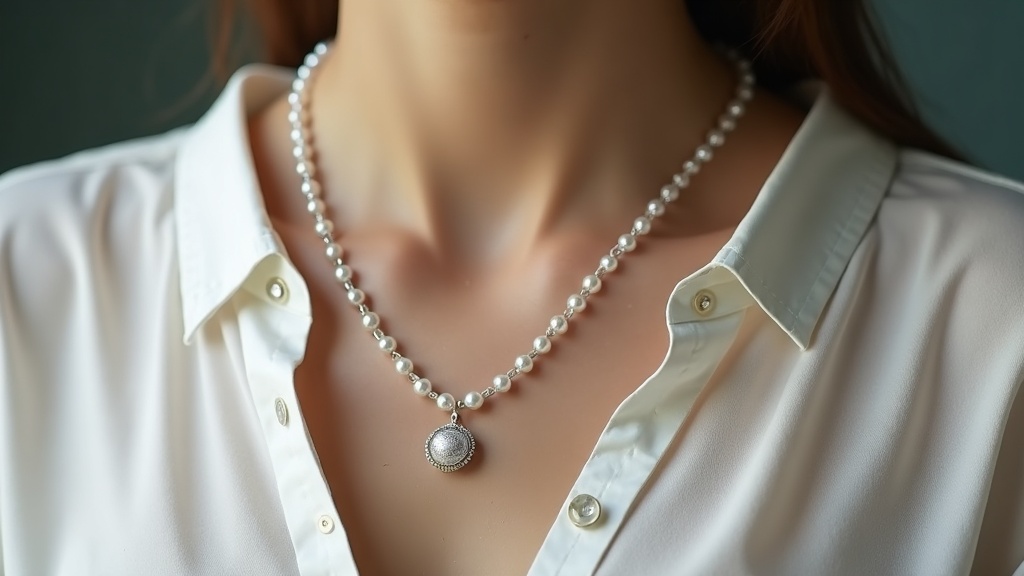
For a first freshwater pearl necklace, I usually recommend a 7 to 8-millimeter strand in the 16- to 18-inch range – that combination is flattering on most people and versatile enough for both casual and formal wear (Richards, 2024)[7]. A 16-inch strand, often called a princess length, sits comfortably at the base of the throat. An 18-inch strand, known as a matinee length, rests slightly lower, offering a more relaxed silhouette that pairs beautifully with business attire or evening wear.
When deciding on the perfect fit, consider your wardrobe. Smaller pearls project a youthful charm, while larger gems make a bold statement. A secure, well-crafted clasp prevents accidental loss and adds refined elegance. Ensure the strand is knotted between each gem to prevent friction and minimize loss if the silk thread breaks.
Freshwater Versus Saltwater Varieties
Understanding the differences between freshwater and saltwater options helps buyers make informed decisions. Freshwater pearls account for roughly 95 percent of the total volume of cultured pearls produced worldwide, making them the dominant type used in pearl necklaces (Cultured Pearl Association of America, 2024)[2]. This massive production volume, primarily centered in China, allows for a wider variety of shapes, sizes, and natural colors at more accessible price points.
Saltwater varieties, such as Akoya, Tahitian, and South Sea pearls, are typically bead-nucleated and cultivated in marine oysters. They are renowned for their perfectly round shapes and sharp, mirror-like luster. However, they are also significantly more expensive due to lower yields and higher farming costs. For those interested in the broader scientific and historical context of these gems, the Cultured Pearl Association of America provides excellent educational resources detailing the biological differences between mollusk species.
Modern cultivation techniques have dramatically closed the quality gap. Today, premium freshwater strands achieve near-perfect roundness and exceptional shine rivaling marine counterparts. The primary advantage lies in value. Buyers acquire larger, high-luster strands with thick nacre for a fraction of the cost. Additionally, natural pastel hues offer unique aesthetic possibilities rarely found in saltwater varieties without artificial dyeing.
Proper Care and Maintenance
Organic gems require specific care routines to preserve their natural beauty. If you wear your freshwater pearl necklace regularly, make it the last thing you put on and the first thing you take off – perfume, hairspray, and cosmetics can all damage the nacre over time (Heebner, 2024)[8]. The chemicals found in everyday beauty products can dull the surface and degrade the silk thread used for stringing.
After each wear, gently wipe the strand with a soft, lint-free cloth to remove oils, sweat, and environmental pollutants. Avoid using ultrasonic cleaners, steam cleaners, or harsh chemical solutions, as these can severely damage the delicate nacre. If a deeper cleaning is necessary, use a mild soap diluted in lukewarm water and a soft cloth, ensuring the strand dries completely flat on a towel to prevent the silk from stretching.
Proper storage ensures longevity. Never toss your jewelry loosely into a box where harder gemstones can scratch it. Store the strand in a soft microfiber pouch or a lined compartment. Wearing the jewelry frequently allows natural skin oils to maintain the nacre’s moisture. Finally, have the strand professionally re-strung every one to two years to ensure the silk remains strong.
Frequently Asked Questions About Freshwater Pearl Necklaces
How can I tell if a pearl is real or fake?
The most reliable method is the tooth test. Gently rub the gem against your front teeth. A real cultured pearl feels slightly gritty due to the microscopic crystalline nacre structure, while a fake bead feels perfectly smooth. Examine the drill holes; real gems have sharp edges, whereas fakes show chipped paint. Slight shape variations also indicate authenticity.
What is the best length for an everyday strand?
For necklace length, 16-inch and 18-inch freshwater strands together represent close to 80 percent of pearl necklace sales for everyday wear (Pearl Paradise, 2024)[3]. A 16-inch princess length sits elegantly at the collarbone, perfect for casual blouses. An 18-inch matinee length drops slightly lower, transitioning seamlessly from the office to evening events. Both lengths are universally flattering.
Why are some strands much cheaper than others?
Price variations are driven by luster, surface quality, roundness, and nacre thickness. Industry surveys indicate that about 55 percent of consumers purchasing a freshwater pearl necklace cite affordability compared with other pearl types as their primary reason for choosing freshwater (Cultured Pearl Association of America, 2024)[2]. Lower-priced strands feature thinner nacre or off-round shapes. Premium strands command higher prices due to sharp reflections and near-perfect spherical shapes requiring meticulous sorting.
Can I wear my jewelry in the shower or pool?
Never wear your strand in the shower, pool, or ocean. Chlorine, salt, and harsh soaps severely damage the delicate nacre and weaken the silk thread. Prolonged water exposure causes the silk to stretch or break, leading to lost gems. Hot water strips natural oils that keep the nacre luminous. Always remove your jewelry before swimming or bathing to ensure structural integrity.
Comparing Pearl Types
When navigating your freshwater pearl necklace options, it helps to understand how different varieties stack up against one another. Each type offers unique characteristics regarding size, luster, and price point. Below is a quick comparison of the most common cultured varieties available on the market today.
| Pearl Type | Typical Size | Luster | Price Range |
|---|---|---|---|
| Freshwater | 5–12 mm | Soft to High | Affordable |
| Akoya | 6–9 mm | Very High | Moderate |
| Tahitian | 8–15 mm | High | Expensive |
| South Sea | 9–20 mm | Satiny | Luxury |
While Akoya and South Sea pearls offer distinct visual appeal, cultured freshwater pearls remain the most versatile and budget-friendly choice for most buyers.
Practical Tips for Buyers
Always request high-resolution photos of the exact strand you intend to buy, as lighting drastically affects luster. If buying a gift, consider the recipient’s existing collection to match metal tones. Pairing your accessory with the right environment enhances its elegance. Just as you would carefully select the perfect yurt interior design layout to highlight natural textures, choose clothing that complements the nacre’s soft glow. Solid colors allow the jewelry to stand out. Consider investing in matching earrings for a cohesive look. When traveling, use a soft pouch to prevent scratches. For more insights, explore our sustainable living and natural care tips to keep organic possessions pristine.
Before You Go
Selecting the right jewelry is a rewarding experience when you understand the key factors of quality, size, and care. This freshwater pearl necklace guide has highlighted the exceptional value and beauty these strands offer. By prioritizing luster and proper maintenance, your accessory will remain a timeless staple in your collection for years. Whether dressing up for a formal event or adding a touch of elegance to daily wear, these gems deliver unmatched versatility. Ready to explore more about natural craftsmanship? Read our detailed article on choosing natural materials for your home to continue your journey.
Learn More
- Global cultured pearl jewelry market size. Statista.
https://www.statista.com/statistics/1339218/global-cultured-pearl-jewelry-market-size/ - Freshwater pearls education. Cultured Pearl Association of America.
https://www.cpaa.org/pearl-education/freshwater-pearls - Pearl necklaces buying information. Pearl Paradise.
https://www.pearlparadise.com/pages/pearl-necklaces - Consumer Perceptions of Cultured Pearl Jewelry. University of New Orleans.
https://scholarworks.uno.edu/cgi/viewcontent.cgi?article=1200&context=mkth - Pearl Buying Guide. Jewelers of America.
https://www.jewelers.org/buying-jewelry/jewelry-buying-guides/pearl-buying-guide - How to Buy Pearls: 6 Easy Steps. Pure Pearls.
https://www.purepearls.com/pages/how-to-buy-pearls - How to Choose Your First Pearl Necklace. JCK Online.
https://www.jckonline.com/editorial-article/how-to-choose-pearl-necklace/ - CPAA Guide to Caring for Pearl Jewelry. Cultured Pearl Association of America.
https://www.cpaa.org/pearl-care-guide