
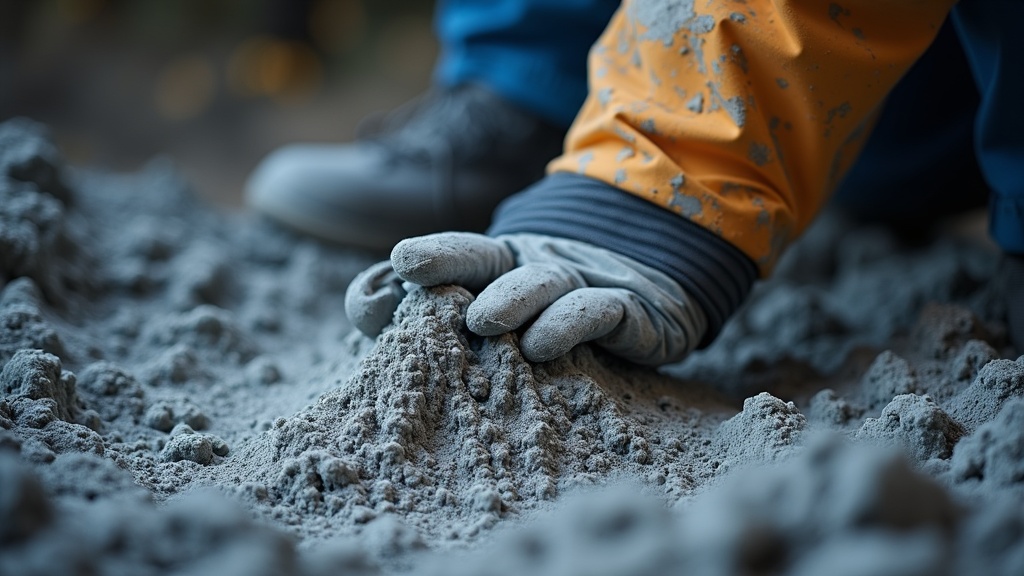
Grout in Mining Techniques: Ground Control for Yurt Camping
Learn how grout in mining techniques for ground stabilization connects to safe yurt camping platforms, backfill grouting, and mixing desk methods for durable foundations.
Table of Contents
- What Is Grout in Mining Techniques?
- Why Yurt Camping Foundations Need Mining-Grade Grout
- Backfill Grouting in Mining Techniques for Yurt Sites
- Mixing Desk Protocols for Consistent Grout Quality
Key Takeaway: Grout in mining techniques refers to injecting fluid cementitious or chemical mixtures into rock fractures and voids to improve ground stability. These same principles apply when preparing stable, level platforms for yurt camping, ensuring safety and durability in uneven terrain.
Quick Stats: Grout in Mining Techniques
- Alternative grout materials for cable-bolt tensioning achieved minimum curing times in as little as 2 hours (University of Western Australia, 2024)[1]
- Optimal water-cement ratio for advanced grouting in fault zones is 0.6 (Frontiers in Earth Science, 2025)[2]
- Best seepage-effect scheme achieved a grout volume proportion of 34% in fault zones (Frontiers in Earth Science, 2025)[2]
Grout in mining techniques forms the backbone of modern ground control, from deep underground tunnels to surface excavations. For yurt camping enthusiasts, understanding these methods offers a surprising advantage: the same principles that stabilize mine roofs and seal water-bearing fractures can create safe, level platforms for yurts on rocky or uneven ground. This article explores how mining-grade grouting translates to practical yurt site preparation, covering backfill grouting, mixing protocols, and real-world data.
What Is Grout in Mining Techniques?
Grout in mining techniques involves pumping a fluid mixture – typically cement, water, and sometimes chemical additives – into subsurface voids, fractures, or soil to improve mechanical strength and reduce permeability. In mining, this is critical for preventing roof falls, controlling water inflow, and stabilizing excavations. The same concept applies to yurt camping: a grouted platform can prevent settling, erosion, and uneven load distribution.
Key Properties of Mining Grout
Effective grout must have low viscosity and small particle size to penetrate fine fractures. Robert Goodman, author of an IMWA paper on mine water control, states that optimal grouts for durable mine water control exhibit low viscosity and very small particle size to permit deep penetration into water-bearing fractures (IMWA, 2018)[3]. For yurt platforms, this means grout can seep into small cracks in bedrock or compacted soil, creating a monolithic base.
Goodman also notes that these grouts set up as an insoluble, chemically inert, flexible or self-healing solid that maintains adhesion to wet rock surfaces and concrete despite continued blasting, mining-induced subsidence and stress redistribution (IMWA, 2018)[3]. This durability is ideal for yurt sites exposed to rain, freeze-thaw cycles, and heavy loads.
A 2025 study in Frontiers in Earth Science identified a water-cement ratio of 0.6 and a grouting pressure of 15 MPa as the optimal parameter combination for advanced grouting in fault fractured zones (Frontiers in Earth Science, 2025)[2]. While yurt camping does not require 15 MPa, the principle of precise water-cement ratio control applies directly to mixing grout for a stable base.
Why Yurt Camping Foundations Need Mining-Grade Grout
Yurt camping sites often sit on uneven, rocky, or loose soil. Without proper stabilization, the yurt floor can warp, doors may bind, and moisture can seep in. Mining-grade grout offers a solution: it fills voids, binds loose material, and creates a level, load-bearing surface. The same techniques used in tunnel grouting can be scaled down for a yurt platform.
Ground Stabilization for Yurts
In mining, grout is injected under pressure to fill fractures and consolidate rock. For a yurt site, a similar approach – using a low-pressure grout injection into the soil or bedrock – can prevent differential settlement. The TU Graz Institute of Applied Geosciences notes the use of variable and mostly very high w/c-ratio grouts (up to 4.0) and ‘grout to refusal’ procedures (TU Graz, 2011)[4]. While high water-cement ratios are used for specific mining applications, yurt foundations benefit from lower ratios (around 0.5 to 0.6) for strength.
Research from the University of Western Australia (2024) shows that alternative grout materials in underground development achieved minimum curing times needed for cable-bolt tensioning in as little as 2 hours[1]. Another formulation reached required cable-bolt tensioning strength after 6 hours, while a third required 8 hours. A slower formulation needed more than 12 hours[1]. For yurt camping, fast-curing grout (2–6 hours) allows same-day platform use, while slower options suit projects with longer timelines.
Backfill Grouting in Mining Techniques for Yurt Sites
Backfill grouting in mining techniques refers to filling voids behind tunnel linings or between rock surfaces to provide structural support. For yurt camping, backfill grouting can stabilize the area beneath a platform, especially on slopes or old mining ground. This method uses a backfill grouting in mining techniques approach adapted for surface-level applications.
Void Filling for Yurt Platforms
When setting up a yurt on rocky terrain, natural voids or cavities can cause uneven support. Backfill grouting fills these spaces with a strong, durable material. The Frontiers in Earth Science study (2025) found that under the best seepage-effect scheme, the grout volume proportion in the fault zone reached 34%, with a seepage-length proportion of 30%[2]. This data demonstrates how grout can effectively fill a significant portion of void space, ensuring uniform load distribution.
For yurt campers, a simple backfill grouting project involves excavating the platform area, identifying voids, and pumping a cement-based grout to fill them. The result is a solid base that prevents the yurt from settling unevenly over time.
Mixing Desk Protocols for Consistent Grout Quality
A mixing desk – the control center for grout preparation – is essential for achieving consistent quality. In mining, the mixing desk monitors water-cement ratio, flow rate, and pressure. For yurt camping, a simplified version ensures the grout batch meets specifications. Using a mixing desk approach helps maintain uniformity across multiple batches.
Practical Mixing for Yurt Foundations
Start with a water-cement ratio of 0.6, as recommended by the Frontiers in Earth Science study (2025)[2]. Mix thoroughly to avoid lumps, which can reduce penetration. For small projects, a paddle mixer attached to a drill works well. For larger yurt platforms, a mortar mixer provides consistent results. Always test the grout’s flowability before application – it should be fluid enough to pour but thick enough to stay in place on slopes.
The University of Western Australia data (2024) on curing times highlights the importance of selecting the right grout formulation[1]. For yurt camping, a grout that cures in 2–6 hours allows the platform to be used the same day, while slower options (8–12+ hours) provide more working time for adjustments.
Frequently Asked Questions
Can I use mining grout for my yurt platform?
Yes, mining-grade grout formulations can be adapted for yurt platforms. Use a low-viscosity cement-based grout with a water-cement ratio around 0.6, similar to the optimal ratio identified in the Frontiers in Earth Science study (2025)[2]. Ensure the grout is applied to clean, compacted soil or bedrock for best adhesion. For small areas, a manual paddle mixer suffices; for larger platforms, consider a mortar mixer. Always allow adequate curing time based on the formulation – 2 to 6 hours for fast-setting options, or overnight for slower ones.
How does backfill grouting work for yurt sites?
Backfill grouting fills voids beneath the yurt platform to create uniform support. In mining, this technique stabilizes tunnels by injecting grout behind linings. For yurts, you excavate the platform area, identify cavities (e.g., between rocks or in loose soil), and pump grout to fill them. The grout volume proportion can reach 34% of the void space, as shown in the Frontiers in Earth Science study (2025)[2]. This prevents uneven settling and extends the life of your yurt foundation.
What is the best water-cement ratio for grout in yurt foundations?
A water-cement ratio of 0.6 is recommended for yurt foundations, based on the optimal parameter combination identified in the Frontiers in Earth Science study (2025)[2]. This ratio balances workability with strength. Higher ratios (up to 4.0, as used in some mining applications) are too weak for load-bearing platforms. Lower ratios (below 0.5) may be too stiff to pour easily. Always test a small batch first to ensure the grout flows into voids without separating.
How long does mining grout take to cure for a yurt platform?
Curing times vary by formulation. University of Western Australia research (2024) shows that alternative grout materials can achieve cable-bolt tensioning strength in as little as 2 hours, while others take 6, 8, or more than 12 hours[1]. For yurt platforms, choose a fast-curing grout (2–6 hours) if you need same-day use, or a slower one (8–12 hours) if you can wait overnight. Always follow the manufacturer’s instructions and test a small area first.
Comparison: Grout Methods for Yurt Camping vs. Mining
While mining and yurt camping operate at vastly different scales, the grouting principles overlap significantly. The table below compares key aspects of grout in mining techniques versus yurt platform applications.
| Aspect | Mining Application | Yurt Camping Application |
|---|---|---|
| Water-cement ratio | 0.6 (optimal), up to 4.0 (specialized) | 0.6 (recommended for strength) |
| Injection pressure | Up to 15 MPa | Low pressure (hand pump or gravity) |
| Curing time | 2–12+ hours (cable-bolt tensioning) | 2–6 hours (preferred for same-day use) |
| Primary goal | Water control, roof stability | Level platform, void filling |
The key takeaway is that the same grout formulation principles – especially the 0.6 water-cement ratio – apply to both contexts, with adjustments only in scale and pressure.
Practical Tips for Using Grout in Yurt Camping
To apply grout in mining techniques to your yurt site, follow these actionable tips:
- Prepare the site: Clear vegetation and loose soil. Excavate to a depth of 6–12 inches, then compact the base. For rocky ground, remove sharp protrusions that could puncture the yurt floor.
- Mix grout carefully: Use a water-cement ratio of 0.6, as recommended by the Frontiers in Earth Science study (2025)[2]. Add water slowly and mix until uniform. For small batches, a drill-mounted paddle mixer works well.
- Apply in layers: Pour grout in 2-inch layers, allowing each to set slightly before adding the next. This prevents segregation and ensures even coverage. For deep voids, use a pump with a low-pressure nozzle.
- Test curing: Before placing the yurt, test a small area for hardness. The University of Western Australia data (2024) shows that some grouts cure in 2 hours, while others take 6 or more[1]. Wait until the grout is firm to the touch.
- Consider a mixing desk: For larger yurt platforms, set up a simple mixing station with pre-measured materials. This ensures consistency across multiple batches, similar to the mixing desk used in mining operations.
For more about Grout, see discover grout insights.
Final Thoughts on Grout in Mining Techniques
Grout in mining techniques offers a proven, data-backed approach to ground stabilization that translates directly to yurt camping. By using a water-cement ratio of 0.6, selecting fast-curing formulations, and applying backfill grouting principles, you can create a durable, level platform that withstands weather and heavy use. For a detailed guide on mixing and applying grout for your yurt site, check out the comprehensive grout mixing guide for step-by-step instructions. Start your project today and enjoy a stable, safe yurt camping experience.
Useful Resources
- Alternative grout materials for cable-bolt tensioning. University of Western Australia.
https://papers.acg.uwa.edu.au/d/2325_40_Jere/40_Jere.pdf - Study on the mechanism of advanced grouting reinforcement in fault fractured zones. Frontiers in Earth Science.
https://www.frontiersin.org/journals/earth-science/articles/10.3389/feart.2025.1635731/full - Optimal grouts for durable mine water control. IMWA.
https://imwa.info/docs/imwa_2018/IMWA2018_Goodman_507.pdf - Pre-Excavation Grouting. TU Graz Institute of Applied Geosciences.
https://www.tugraz.at/fileadmin/user_upload/Institute/IAG/Files/11_Pre_Exc_Grouting_BASF.pdf